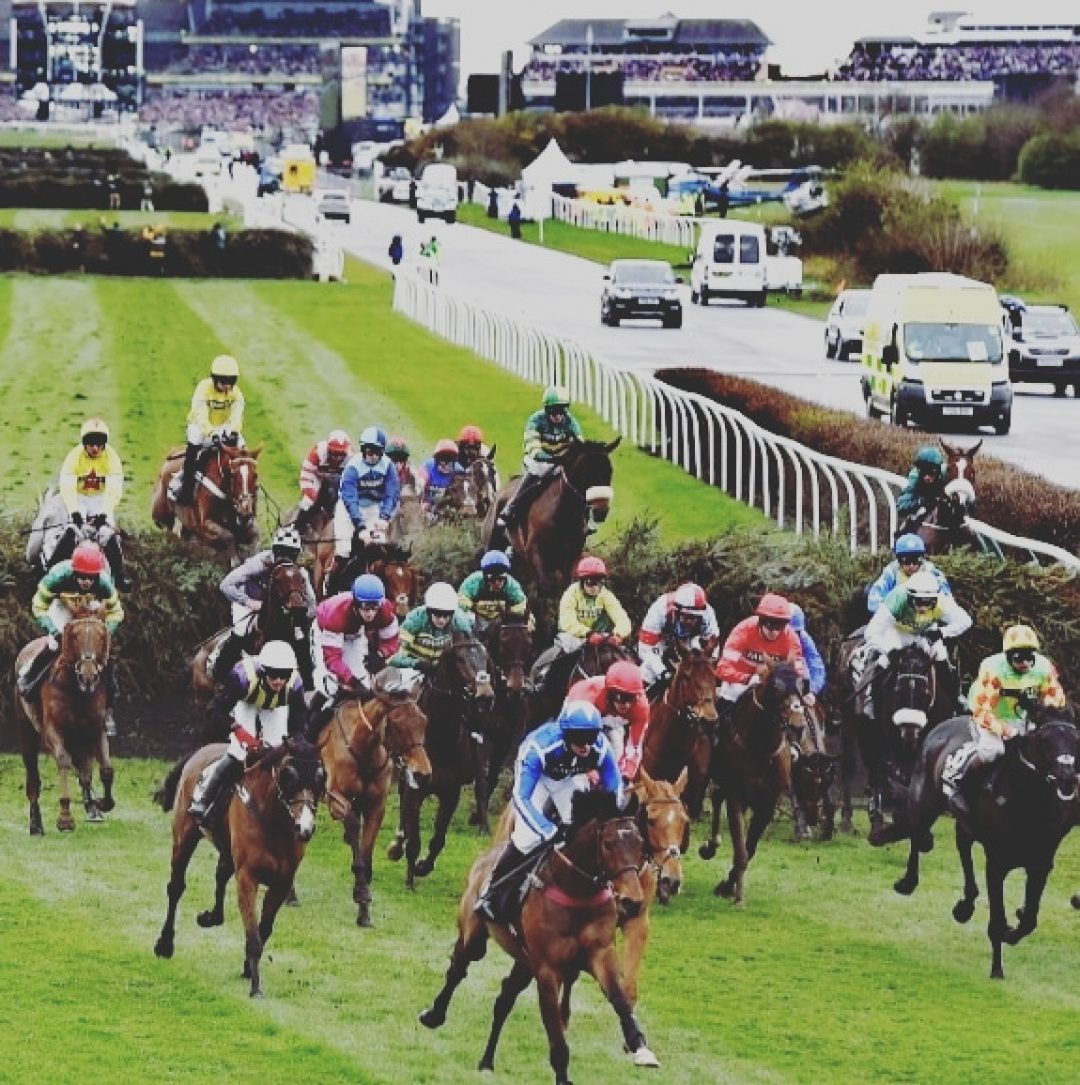
The Grand National is the worlds greatest Steeplechase. But when did it all start?
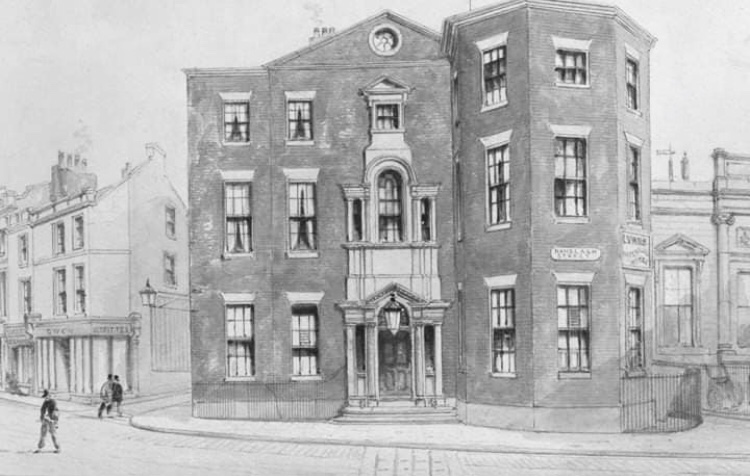
To answer that particular question we need to go back to a time before the first official running of the big race. In the 1800s a Liverpool hotel owner called William Lynn had the idea of hosting horse racing in the area. Even before any horse had jumped a fence, the Grand National was building up a fascinating history. William Lynn was born in 1792 at East Grinstead in Sussex. William Lynn worked in the catering trade in London before moving to Liverpool. In Liverpool he leased the Waterloo Hotel in Ranelagh Street in the 1820s. In 1829 William Lynn approached Lord Sefton about leasing land at Aintree to stage flat racing events.
Lord Sefton himself was a keen racing enthusiast. He agreed to lease the Land. Lynn set out his plans to build a Grandstand. On the 7th February 1829 Lord Sefton laid the first foundation stone and placed a container of sovereigns inside the footings. The very start of Aintree Racecourse and the Grand National had been created.
The Grand National is a Class 1 Grade 3 steeplechase handicap race. The steeplechase horse race originated in Ireland in the 18th Century. A steeplechase was a race across open countryside from one church steeple to another. And that’s how it got its name. The first steeplechase recorded in the history books was in 1752. A bet between two men Mr Cornelius O’Callaghan and Mr Edmund Blake to see who had the fastest horse. They raced their horses across country 4 miles from St Johns church in Buttevant to St Mary’s church in Doneraile in Cork. History does not record who won the bet but an account of the race made its way to the library of the O’Briens of Dromoland Castle.
The first recorded steeplechase of any kind in England took place in Leicestershire in 1792. 3 horses raced the 8 miles from Barkby Holt to Billesdon Coplow and back.
However records had shown a race took place in Newmarket in 1754 a mile long with obstacles to jump. So there is some conflicting historical records.
The first recognised English National Steeplechase took place on Monday 8 March 1830. The 4-mile race, organised by Thomas Coleman of St Albans, was run from Bury Orchard, Harlington in Bedfordshire to the Obelisk in Wrest Park, Bedfordshire. Thomas Coleman of the Turf Hotel in St Albans was instrumental in bringing steeplechasing to Great Britain from Ireland.
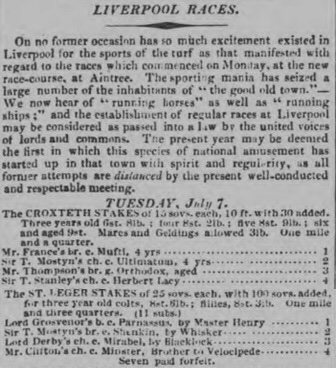
The first meeting at Aintree racecourse was on July 7, 1829. The opening race was the Croxteth Stakes, ran over 1 ¼ miles, and won by a horse called Mufti. With the strong financial support and ardent backing from the Jockey Club racing committee, Lord Sefton and a few Aintree syndicate members, the racecourse prospered.
In 1835, Lynn experimented with hurdle racing. His October venue would be made an exclusive hurdling fixture. The event was a complete success, especially when celebrated rider Captain Martin Becher arrived to take part and rode the impressive hurdler Vivian to two successes.
1835 William Lynn had the idea of staging a steeplechase at Aintree. It is rumoured that Captain Becher engaged with Lynn in a conversation about the Great St. Albans Steeplechase. And planted the idea of “a great northern steeplechase”. William Lynn assessed the success of the St Albans Steeplechase and was fascinated by the event. With the help of Captain Becher, he set about bringing a Grand Steeplechase event to Aintree, Liverpool.
There is conflicting historical records regarding the very start of the Grand National. There is much debate amongst historians regarding the first official and unofficial runnings. The unofficial Grand Nationals were run from 1836 to 1838. These races have often long been disregarded because of the belief that they were run at nearby Maghull and not Aintree racecourse.
In 1836 the first Grand Liverpool steeplechase was held on a leap year day, 29 February, 1836, and was won by Captain Becher on a horse called The Duke. He won again in 1837. Sir William won in 1838. Some historians have unearthed evidence that suggests those three races were run over the same course at Aintree. Also, that they were regarded as Grand Nationals up until the mid-1860s. Before being disregarded as unofficial runnings.
Newspaper reports place all the 1836-38 races at Aintree although the 1839 race is the first described with words such as “Grand and National”. To date though, calls for the Nationals of 1836–1838 to be restored to the record books have been unsuccessful.
In 1838 and 1839 numerous events transformed the Liverpool race from a small local affair to a National event. The Great St. Albans Chase was not renewed after 1838. This leaving a huge hole in the steeplechasing calendar. Secondly, the railway arrived in Liverpool, enabling transport to the course by rail. Finally, a committee was formed to better organise the event. These events led to more publicity of the 1839 race. Top class horse, jockeys and greater press coverage and increased attendance figures followed. Over time, the first three runnings were forgotten, securing 1839 its place in Grand National history as the inaugural race.
In those days, courses were flagged not railed. And horses jumped a stone wall, crossed ploughed land and finished over two hurdles.
A crowd of 50,000 attended Aintree and watched Jem Mason ride Lottery to victory at Aintree on February 26 1839.
Mr John Elmores 9 Year old gelding the first winner of the first official running of the big race. Before the National he had made a good impression when winning the Cheltenham steeplechase and started 5-1 favourite at Aintree. However the horse for some reason hated top jockey Jem Mason. Jem had to wear a coat over his jockey colours every time he mounted him. The race was a huge success one particular headline in a major British tabloid read
“New Chase an outstanding success favourite Lottery Wins”
By the 1840s, Lynn’s ill-health blunted his enthusiasm for Aintree. Edward Topham who was known as the wizard and a respected handicapper also a member of Lynn’s syndicate, began to exert his influence. The syndicate whose members were some very influential men including the Earls of Derby and Sefton and Lord Bentinck. He turned the chase into a handicap from a weight-for-age race in 1843. He took over the lease in 1848 and one century later, the Topham family bought the course outright.
The number of recorded courses grew from one in 1829 to 39 in 1838.
The race was officially made a Handicap race in 1843 by Edward Topham who was known as the Wizard and by 1847 it was re-named the Grand National.
Everyone from the Royal Family to everyday racing fans soon flocked to the Liverpool course. A National Hunt Committee was formed in 1866. The race and Aintree racecourse prospered.
Despite this success, Lynn was to step back from the Grand National and, prior to his death in 1870, referred to his Aintree venture as ‘a most unlucky speculation’.
Noawadays the Aintree Grand National is a world sporting spectacle. Watched around the Globe by 700 million people. Who would have known all them years ago a hotel owner from Liverpool would create such a spectacle. When Lynn established a flat racing course he could have had no idea of what it would become today.
William Lynne continued to run the Waterloo Hotel until 1870 when it was acquired by the Cheshire Lines Committee to make way for the development of Liverpool’s Central railway station. Today the site is Liverpool Central station and shops. William Lynn died on 11 October 1870 at his home in West Derby in Liverpool in an area redeveloped in the late twentieth century. He is buried in St James Cemetery next to Liverpool Cathedral. The rest as they say is history and what an incredible history we have…. ❤️🏇
 The Grand National World